Extreme events, from pandemics to hazards associated with climate change, negatively impact human health by directly causing illnesses and damaging healthcare infrastructure. CEER researchers are investigating how extreme events may impact specific communities, and how the public health system can better support community resilience.
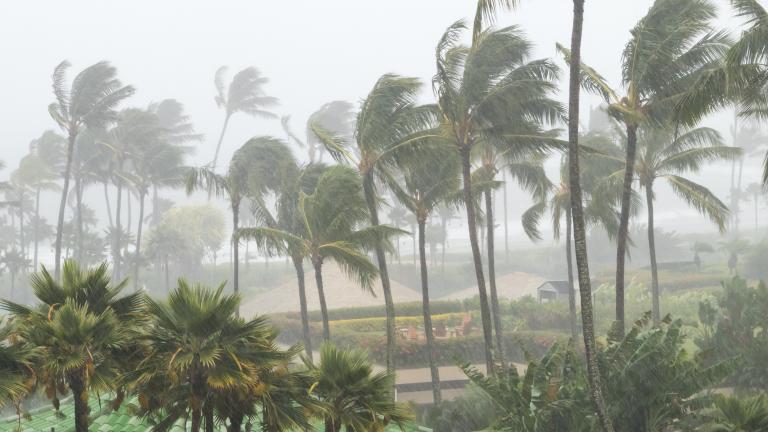
Climate Change and Health in US-affiliated Pacific Islands
CEER and CHanGE investigators are working with the Association of State and Territorial Health Officials (ASTHO) and U.S. territories and Freely Associated States in the Pacific to identify how contextual factors influence the implementation of climate change and health (CCH) adaptation steps among local public health agencies (PHAs) in island jurisdictions. This project consists of interviews with PHA officials, focus groups with local PHA partners, and a regional workshop with Pacific Island PHA leaders to coproduce solutions to improve the implementation of CCH adaptation steps.

The Value Public Health Brings to Climate Change Initiatives
The National Association of County and City Health Officials (NACCHO) Global Climate Change Workgroup identified a gap in knowledge about the role of local health departments in interagency climate initiatives and the value they can bring to local sustainability, adaptation, and resilience projects. To address this gap, CEER researchers and the workgroup refined and piloted interview facilitation guides. The facilitation guides sought to explore existing models of public health involvement in climate initiatives, influences on local health departments’ (LHDs) abilities to work on climate change-related projects, and advice for other LHDs looking to get more involved in climate-related work. Workgroup members and CEER investigators also led an interactive session at the 2024 National Adaptation Forum to brainstorm barriers, facilitators, and best practices for integrating local public health considerations and practitioners within climate change adaptation plans and projects.
Additional Publications
- Errett, Nicole; Lamprea Montealegre, Julio; Busch Isaksen, Tania (2021) “King County COVID-19 Community Study.” DesignSafe-CI. https://doi.org/10.17603/ds2-atw6-7z47.
- Doubleday A, Choe Y, Busch Isaksen T, Miles S, Errett NA. How did outdoor biking and walking change during COVID-19?: A case study of three U.S. cities. PLoS One. 2021 Jan 20;16(1):e0245514. doi: 10.1371/journal.pone.0245514. PMID: 33471858.
- Rubin O, Errett NA, Upshur R, Baekkeskov E. The challenges facing evidence-based decision making in the initial response to COVID-19. Scand J Public Health. 2021 Mar 8:1403494821997227. doi: 10.1177/1403494821997227.
- Rodrigues, M.A., Silva, M.V., Errett, NA, Davis, G., Lynch, Z., Dhesi, S., Hannelly, T., Mitchell, G., Dyjack, D., Ross, K.E., How can Environmental Health Practitioners contribute to ensure population safety and health during the COVID-19 pandemic?, Safety (2020), doi: https://doi.org/10.1016/j.ssci.2020.105136
- Barnett DB, Kneiser L, Errett NA, Rosenblum A, Seshamani M, Kirsch T. Re-examining healthcare coalitions in light of COVID-19. Disaster Medicine and Public Health Preparedness. https://doi.org/10.1017/dmp.2020.431
- Errett NA, Howarth M, Shoaf K, Couture M, Ramsey S, Rosselli R, Webb S, Bennett A, Miller A. Developing an Environmental Health Sciences COVID-19 Research Agenda: Results from the NIEHS Disaster Research Response (DR2) Working Group’s Modified Delphi Method. Int. J. Environ. Res. Public Health 2020, 17(18), 6842; https://doi.org/10.3390/ijerph17186842
- Killien EY, Mills B, Errett NA, Sakata V, Vavilala MS, Rivara FP, Kissoon N, King MA. Prediction of Pediatric Critical Care Resource Utilization for Disaster Triage. Pediatr Crit Care Med. 2020. doi: 10.1097/PCC.0000000000002425.
- Errett NA, Sauer LM, Rutkow L. An integrative review of the limited evidence on international travel bans as an emerging infectious disease disaster control measure. J Emerg Manag. 2020 Jan/Feb;18(1):7-14. doi: 10.5055/jem.2020.0446.